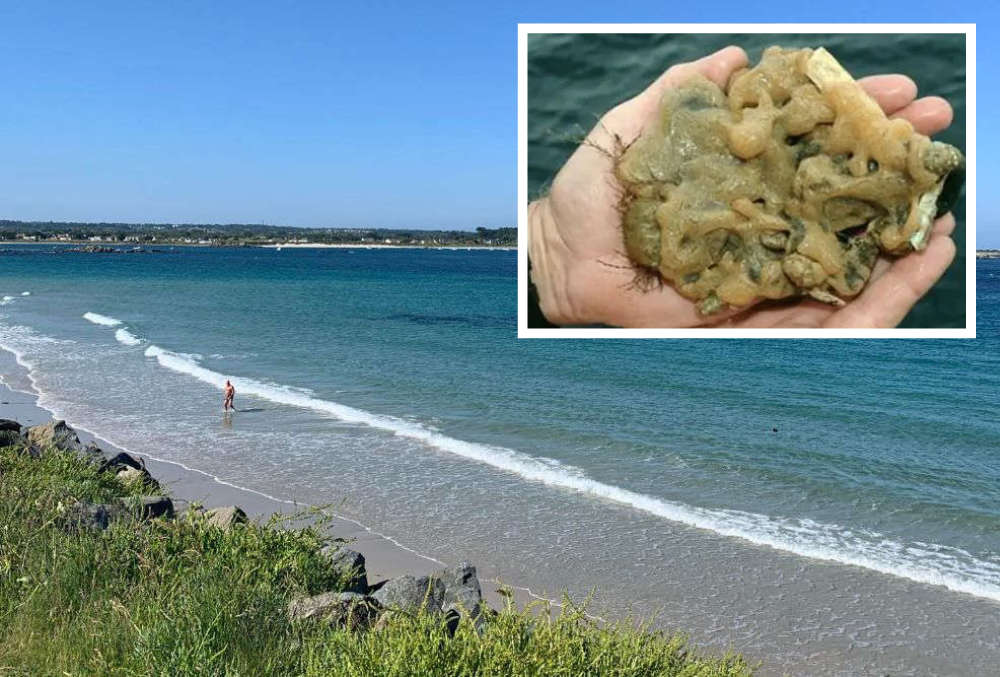
The States are asking islanders enjoying local waters to "Check, Clean, and Dry" their equipment to slow the spread of invasive species.
Agriculture, Countryside and Land Management Services (ACLMS) and Guernsey Ports have produced guidance for those entering local waters.
The "Check, Clean, and Dry" advice is designed to prevent pests, plants, and diseases from clinging to gear and being unknowingly transported.
Natural Environment Officer Julia Henney says it's a simple but effective prevention method.
"We're asking islanders to check their equipment and remove any sort of plants, animals or debris.
"Cleaning their equipment really well with fresh water or even hot water is ideal.
"And then allow their equipment to dry.
"That will make sure that there are no invasive non-native species that are surviving on that kit before you move it to a new location.
"Without doing that, there is a risk that you will spread these invasive species either from other jurisdictions into the island or actually from one bay to another around our shores."
Julia says we are all responsible for protecting Guernsey's biodiversity:
"If you're a paddleboarder, you might end up with seaweed caught on your oars. Or a kayaker, you sometimes get little pools of water stuck in your kayak, but it could also be your swimming costume.
"If you're a recreational boater, it's making sure that you are checking and cleaning the hull of your vessel on a regular basis. Or when you pull your anchor up, making sure it's sort of free from seaweed."
Julia says if left unchecked, invasive species can devastate areas:
"Invasive species can really smother areas, and out-compete native species.
"Things like Japanese wireweed can block out the light from rock pools.
"Or there's these encrusting organisms that smother rocks or vessel holes even.
"But there can also be really significant economic consequences as well.
"So there's a lot of species out there that might compete with commercially important species. So it can affect fisheries.
"Or it could be diseases that will affect our aquaculture.
"But there are also things that might just smother marine infrastructure and so make it really costly to sort of maintain and manage that infrastructure in the marine environment.
"Managing invasive species on land is costly enough.
"But when you throw in the difficulties of actually getting into the water and surveying and then physically removing them in water, it just becomes an almost impossible feat."
Since 2023, Guernsey has been tackling D-VEX, otherwise known as sea vomit.
"That's this encrusting sponge. And it can cover huge, huge areas.
"It can really blanket infrastructure, especially man-made infrastructure. So if you're reliant on that infrastructure moving, it can actually clog that up and seal that up, and it becomes really costly to maintain."
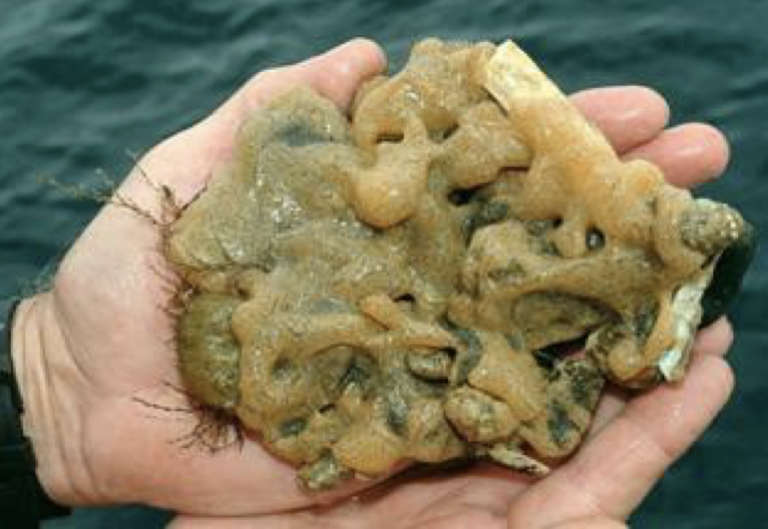
D-VEX/Sea Vomit. Image from Columbia University
 Gas price increase for Guernsey and Jersey
 Aurigny sets out timeline for its Alderney services
 New restaurant and flats planned for Guernsey waterside location
 Full-fat milk gaining popularity in Guernsey
 Guernsey cannabis debate to be postponed
 Guernsey’s Wildlife Hospital build reaches the halfway point
 Channel Islands Contemporary Art Show opens
 Alderney flights disrupted for six days